Gum Grafting in Gaithersburg and Clarksburg, MD
If your teeth are becoming more sensitive or appearing longer, you may be dealing with gum recession. Gum grafting protects exposed roots and restores a healthy, even gumline before the problem advances.
At Tong Dental Care, our in-house periodontist, Dr. Andrew Tong, provides specialized, gentle gum grafting without requiring an outside referral. Additionally, this procedure can be completed at either of our locations in Gaithersburg and Clarksburg, MD.
Understanding Gum Recession and Your Treatment Options
Gum recession occurs when the protective tissue surrounding your teeth wears away or pulls back, exposing the vulnerable roots. You may notice your teeth appearing longer, persistent root sensitivity, an uneven gumline, or small notches near the base of your teeth.
Several factors drive recession:
- Active periodontal disease and chronic gum inflammation
- Aggressive brushing with a hard-bristled toothbrush
- Naturally thin gum tissue or a history of orthodontic treatment
- Bite trauma or habitual teeth grinding
Changing brushing habits can stop further wear, but cannot restore tissue that is already gone. If an active infection is present, a deep teeth cleaning (also called scaling and root planing) is typically the non-surgical first step to stabilize your gum health. An evaluation with our periodontist confirms whether a gum graft is needed to stabilize your smile and protect the underlying bone.
Your Gum Grafting Options
A gum graft is tailored to your specific clinical needs, whether the goal is to cover exposed roots, thicken naturally thin tissue, or halt active recession. Dr. Andrew Tong evaluates your unique tissue thickness and recession pattern to select the most predictable technique.
- Connective tissue grafts: Cover exposed roots using tissue from beneath the palate. The most common technique for root coverage.
- Free gingival grafts: Reinforce and thicken a naturally thin band of protective tissue along the gumline.
- Pedicle grafts: Gently slide neighboring healthy tissue over the recession site when adjacent tissue is abundant.
Tissue can come from your own palate for long-term predictability, or from processed donor tissue to eliminate a second surgical site and improve recovery comfort.
What to Expect During Your Gum Grafting Appointment
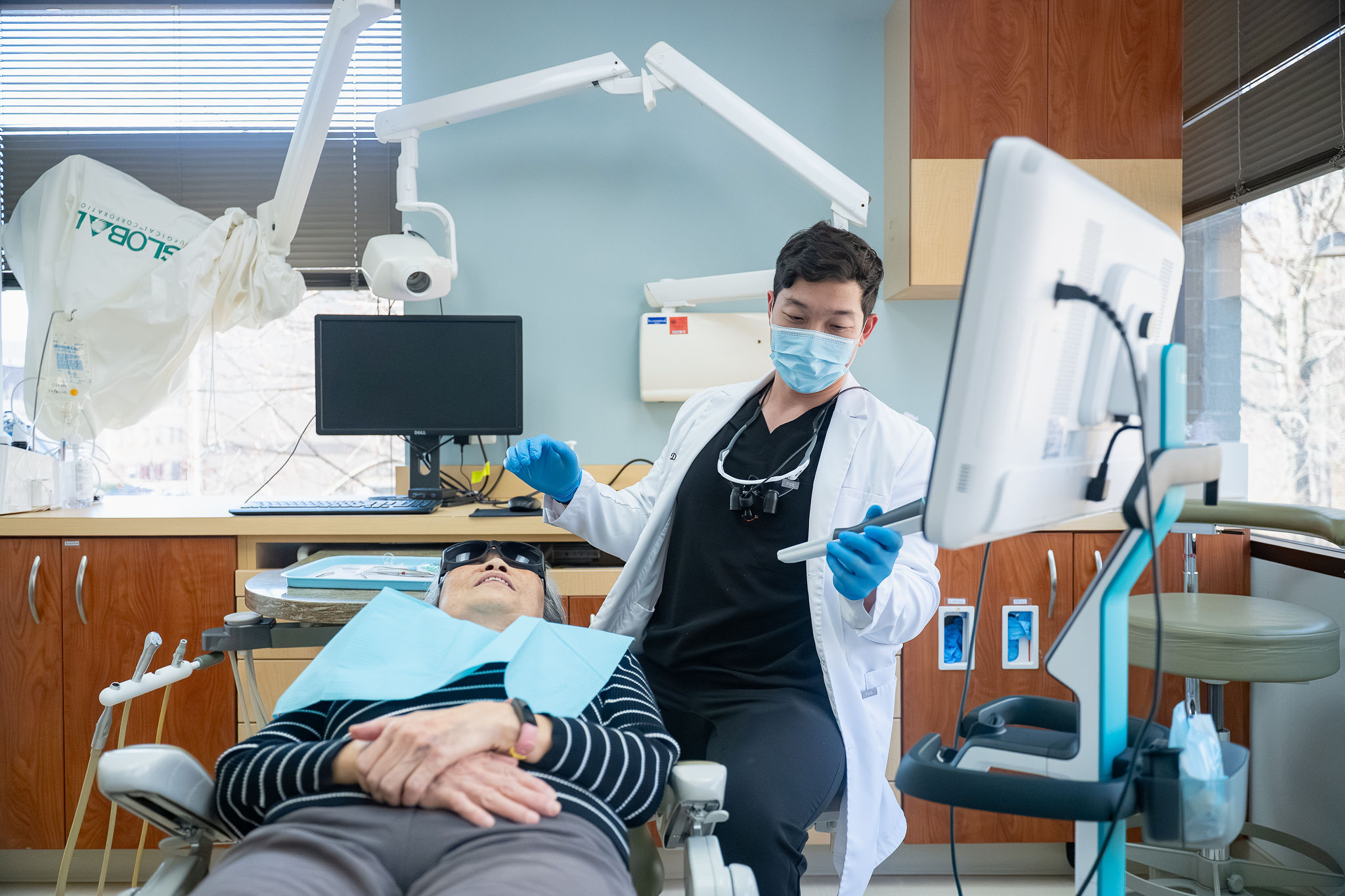
A successful gum graft in Gaithersburg, MD starts with a thorough periodontal evaluation. Dr. Tong maps out a clear, predictable path for your smile before any treatment begins.
- Clinical Assessment: Dr. Tong takes precise measurements and digital photos of the recessed areas.
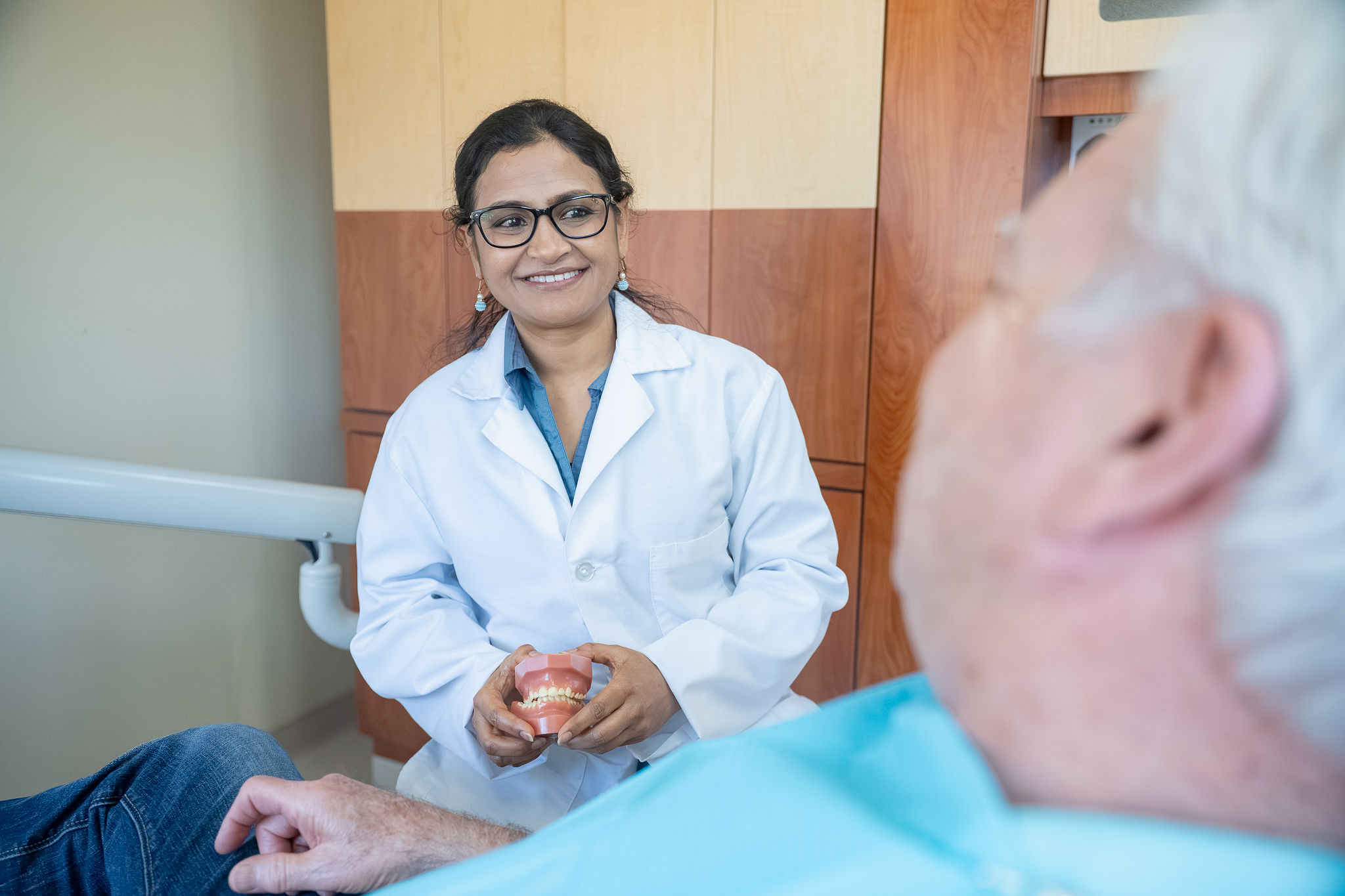
- Treatment Planning: Together, you review grafting options and select the most suitable tissue source.
- Day-of Procedure: Local anesthetic keeps you comfortable throughout. You feel only mild pressure, not pain.
- Follow-Up Care: Detailed recovery instructions and monitoring visits confirm optimal healing.
As a periodontist, Dr. Andrew Tong performs advanced periodontal plastic surgery at our Gaithersburg office. For patients with dental anxiety, gentle sedation options are included as a standard part of care, not an add-on.
Your Healing Timeline After Gum Grafting
Recovery from a gum graft in Gaithersburg, MD typically spans two to three weeks, though most patients return to light work within 48 hours. Manage early swelling with cold compresses. If palate tissue is used as the donor, that site may feel similar to a mild pizza burn, separate from the graft itself.
Week One: Protecting the Graft
Stick to soft foods and avoid pulling your lip to inspect the stitches. To protect healing tissue:
- Avoid hard, crunchy, or sharp-edged foods.
- Do not brush or floss directly on the surgical site.
- Skip straws, smoking, and any physical contact with the area.
Weeks Two and Three: Gradual Return
Normal chewing resumes gradually. Long-term graft stability depends on addressing the root cause of recession. If periodontal disease triggered the problem, foundational therapy is essential to protect your results.
Frequently Asked Questions About Gum Grafting
How do I know if I need a gum graft or just a change in brushing?
Changing your brushing technique can stop future wear, but it cannot regenerate tissue that is already lost. You likely need a gum graft if recession has exposed the root surface, if you lack a strong band of attached tissue to protect the tooth, or if you experience persistent temperature sensitivity or notice your teeth looking longer. A professional evaluation with Dr. Tong confirms whether a structural graft is needed to prevent root decay and bone loss.
What type of gum graft is best for receding gums?
The best technique depends on your specific recession pattern, tissue thickness, and treatment goals. Connective tissue grafts typically work best for covering exposed roots. Free gingival grafts are ideal for thickening naturally thin gum tissue. Pedicle grafts are an excellent option when adjacent tissue is plentiful. Our periodontist selects the most predictable method during your initial consultation.
Is gum grafting painful?
You will not feel pain during the procedure itself because we completely numb the area and offer gentle sedation for anxious patients. Post-operative discomfort is typically mild to moderate and manageable with over-the-counter pain relievers or prescribed medication. Most patients find the graft site comfortable; temporary soreness is more common at the palate donor site and feels similar to a mild burn from hot food.
How long does a gum graft take to heal?
Surface healing typically takes two to three weeks, while the underlying tissue requires several months to fully mature and integrate. Most patients return to light work within 48 hours. If palate tissue is used, that donor site may heal at a slightly different rate. Following soft-food guidelines and avoiding irritation to the area keeps recovery fast and uncomplicated.
How much does gum grafting cost and does insurance cover it?
The cost depends on the number of teeth treated, the specific grafting technique, and whether donor or palate tissue is used. Most dental insurance plans provide partial coverage when the graft is deemed medically necessary. Tong Dental Care is insurance-friendly and files claims on your behalf to maximize your benefits. We also accept CareCredit financing. Request a personalized cost estimate during your consultation.
If gum recession is from gum disease, do I need treatment before grafting?
Yes. Any active infection must be completely resolved before a gum graft can heal successfully. Placing a graft over active disease significantly increases the risk of failure. We typically perform foundational therapies to treat periodontal disease and establish a clean, stable foundation first. Once your gums are healthy and inflammation is gone, we can safely proceed with your graft.
Begin your tong care journey
Ready to Restore Your Gum Health?
Gum recession is a progressive condition. The sooner treated, the better your long-term outcomes. If you are ready to protect your teeth and restore your smile with a gum graft, our team at Tong Dental Care is here to help.